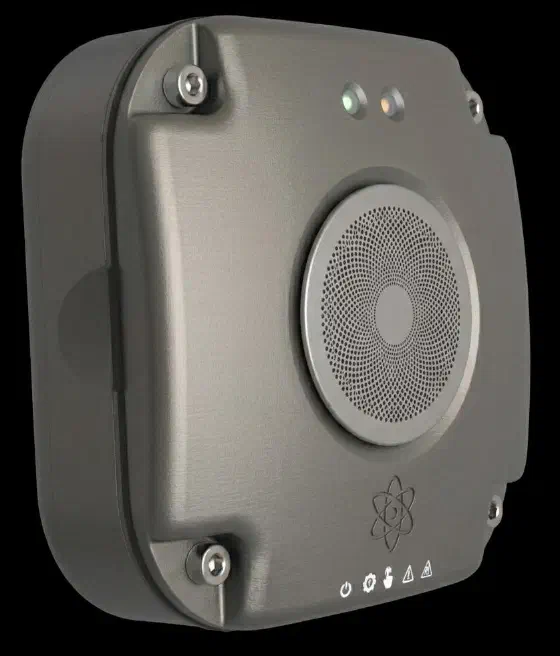
The BVS is a battery voltage supervision system that records in real time the cell voltage, the inter-cell connection voltage and the temperature during capacity and charging tests, as required by IEC, IEEE and NERC standards. Its modules detect the cells failing the test so they can be safely removed from the bank.
Advantages
Modular and scalable
A control unit powers and polls over RS485 the cell voltage modules spread along the bank; optional string voltage and string current modules complete the picture of the whole.
Two versions to match the bank
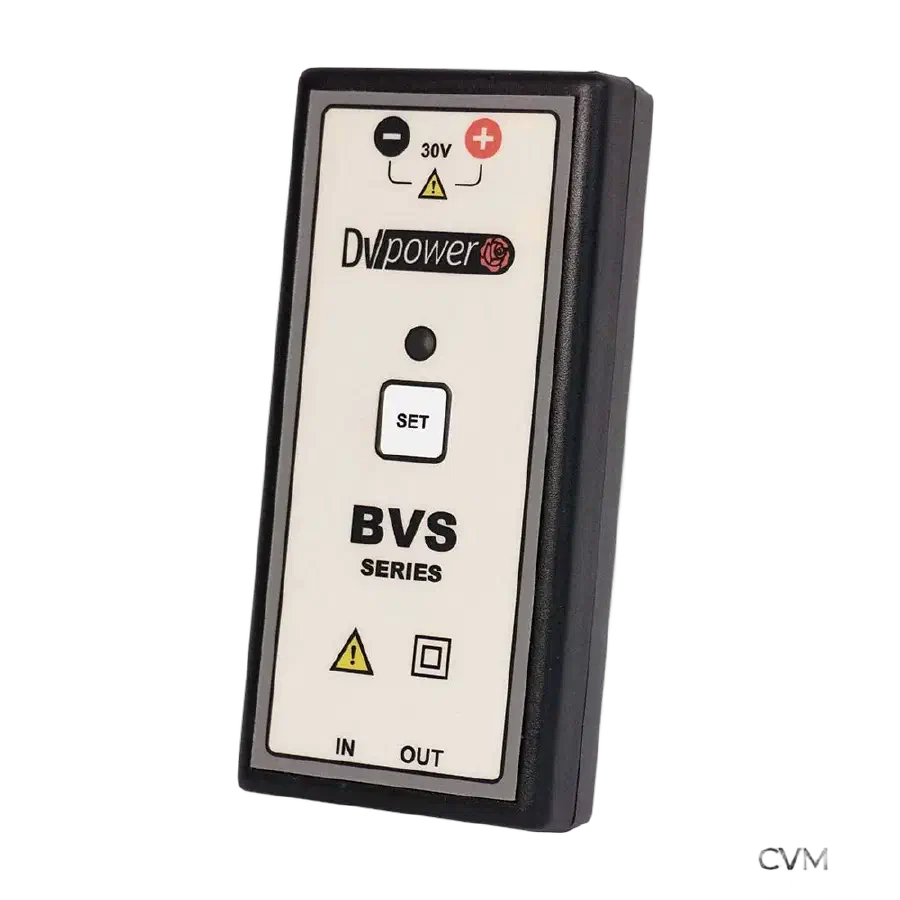
In the BVS version each module measures one cell — including the inter-cell voltage — and in the BVS-4 each module handles four cells, with fewer modules and less wiring.
Faults located instantly
Out-of-tolerance values are flagged with LEDs on the module itself, so the degraded cell is identified and bypassed without stopping the rest of the test.
Robust by design
The failure of one module does not interrupt the communication of the others, and the control unit adds four ambient temperature channels and an internal 2 GB SD memory.
Applications
- Capacity tests of stationary banks with cell-by-cell supervision.
- Voltage monitoring during charging and recharging.
- Detection of degraded cells and inter-cell connections.
- Automated tests together with the discharge unit or any load bank.
- Substations, UPS, telecom and power plants.
About the product
Cell voltage is measured up to ±30 V with 1 mV resolution; inter-cell voltage up to ±50 mV with 1 µV; and the optional modules reach ±600 V of string voltage. Data travels to the PC over USB or Bluetooth and the DV-B Win software presents it next to the discharge unit results in a single report.
Accessories: CVM or CVM-4 cell voltage modules, SVM string voltage module, SCM string current module and optional cell temperature probes.
Technical specifications
| Versions | BVS (1 cell per module); BVS-4 (4 cells per module) |
| Cell voltage | ±30 V; 1 mV resolution |
| Inter-cell voltage (BVS) | ±50 mV; 1 µV resolution |
| String (optional modules) | ±600 V and clamp-based current |
| Sampling | Down to 1 s, depending on the number of modules |
| Communication | Internal RS485; USB or Bluetooth to PC |
| Power supply | 90 – 264 V AC; 110 VA |
| Control unit | 180 × 205 × 63 mm; 0.78 kg |
Frequently asked questions
What is the difference between the BVS and the BVS-4?
The number of cells per module: one on the BVS, which also measures the inter-cell voltage, and four on the BVS-4, which simplifies installation on large banks.
Does it work with any discharge equipment?
Yes. With the optional string voltage and current modules, the system automates the capacity test with any load bank on the market.
What happens if a module fails mid-test?
Nothing beyond losing that measuring point: the communication of the remaining modules with the control unit continues uninterrupted.
How are faulty cells identified?
Each module flags out-of-tolerance values with LEDs and the software marks the cell, which can be safely bypassed during the discharge.
Does it measure temperature too?
Yes. The control unit offers four ambient temperature channels and the modules accept an optional cell temperature probe.