Multifunction installation testers
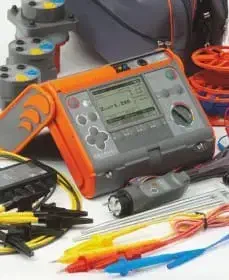
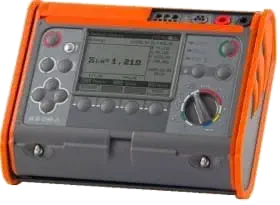

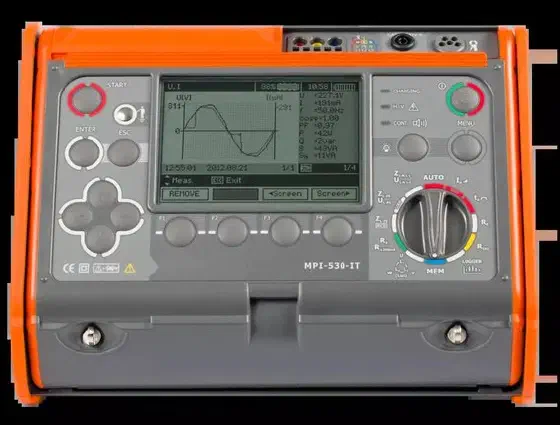
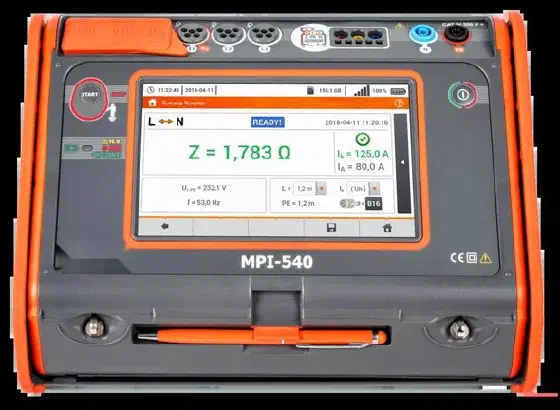
Multifunction installation testers bring together the electrical-safety checks of a low-voltage installation in one instrument — continuity, insulation resistance, loop and line impedance, RCD operation and earth resistance — for commissioning and periodic verification. The Amperis range for the electrical sector includes multifunction testers for installers and inspection bodies.
What it measures and how it works
A single tester runs the full verification sequence: continuity of protective conductors (with a 200 mA source), insulation resistance at 250/500/1000 V, loop and line impedance with the prospective short-circuit current, RCD trip time and current (including a no-trip mode), earth resistance and phase sequence. Automatic sequences and pass/fail limits speed up routine certification and keep records consistent.
How to choose the right tester
- Confirm it covers every function you certify (the relevant IEC 61557 parts).
- Look for automatic test sequences and stored limits.
- Check RCD type coverage (AC, A, F, B) and ramp testing.
- Prioritise memory, app/PC transfer and certificate export.
- Choose a rugged, IP-rated case for site work.
Not sure which functions you need? Do not hesitate to contact us.
Applications
- Building and industrial LV installation commissioning
- Periodic inspection and certification
- EV charging-point verification
- Photovoltaic and renewable installations
- Maintenance of distribution boards and final circuits
Applicable standards
Amperis instruments are referenced to the IEC/EN framework (not national PN/PL designations):
- IEC 61557 (parts 1–12) — performance of equipment for testing LV installation safety
- IEC 60364-6 — verification of low-voltage installations
- IEC/EN 61010-1 — instrument safety
Frequently asked questions
What is IEC 61557?
It is the series that defines the performance of instruments used to test the protective measures of low-voltage installations; each part covers a measurement (insulation, loop, RCD, earth, continuity, and so on).
Why a no-trip loop test?
On circuits protected by an RCD, a no-trip loop measurement determines the fault loop impedance without tripping the device, so testing does not interrupt supply.
What insulation voltage and value apply?
A 500 V DC test with a 1 MΩ minimum is typical for general LV circuits under IEC 60364-6; use 250 V where sensitive electronics are present.
Technical resources
Combine installation testing with tellurometers, insulation resistance meters and low-resistance ohmmeters. Request a quote.
Related calculator
- Cable calculator: low voltage, medium voltage and short circuit IEC 60364-5-52:2009 · IEC 60364-4-43:2023 · IEC 60228:2023 · IEC 60287 · NEC 310.16/310.17 · IEEE 399-1997 · IEEE 525-2007 · IEC 60853-1:1985 · IEC 60034-1:2022
Electrical test instrument selector Tell us what you need to measure and on which installation —insulation, earth, loop, RCDs, micro-ohmmeter and other measurements— and get the instrument that covers your specification, with its standard accessories and the ones worth adding. You can send us the selection with the technical report attached. Open the selector and find my equipment Close the selector
Undecided between several models? Compare them side by side: Insulation resistance testers compared · Multifunction installation testers compared · Earth resistance testers compared · Loop impedance testers compared