Insulation resistance meters 1 to 15 kV
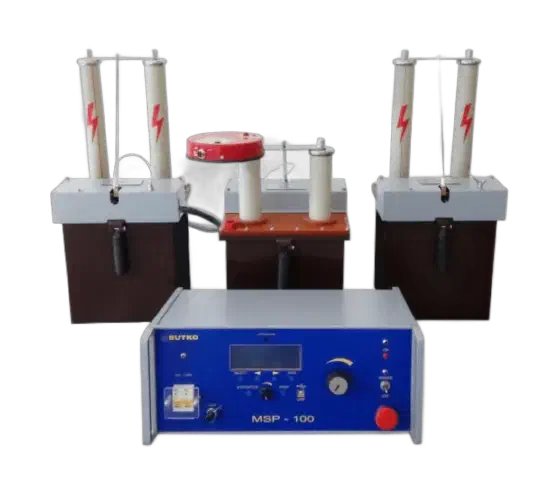
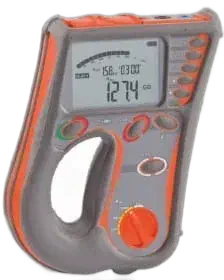
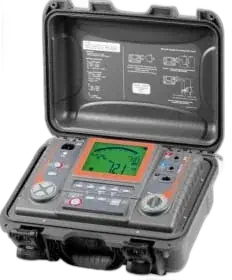
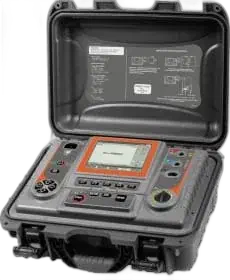

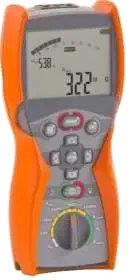
Insulation resistance meters (megohmmeters) apply a DC test voltage and measure the leakage current through the insulation of cables, transformers, motors and switchgear. The reading — in MΩ, GΩ or TΩ — exposes moisture, contamination and ageing before they turn into an earth fault.
What do they measure and how?
The tester holds the selected voltage (50 V to 15 kV across the range) and tracks resistance over time. Beyond the spot value it computes diagnostic ratios: dielectric absorption ratio (DAR, 60 s/30 s) and polarisation index (PI, 10 min/1 min), which IEEE 43 uses to judge rotating machines (PI ≥ 2 acceptable for class B insulation and above).
Choosing the test voltage
- 1 kV: LV installations, telecom and building wiring.
- 2.5 kV: industrial motors and medium-power cables.
- 5 kV: MV cables, transformers and generators.
- 10 kV: HV substation asset diagnostics.
- 15 kV: highest-voltage assets (ANSI/NETA recommends 15 kV above 34.5 kV rating), with high noise immunity.
- Dielectric tests for PPE: insulating gloves, sticks and matting.
Torn between two ranges? Email the asset details to info@amperis.com.
Applications
- Preventive maintenance of substations and lines.
- Motor and generator diagnostics (PI/DAR per IEEE 43).
- Acceptance testing of new cables and installations before energising.
Applicable standards
- IEC 61557-2: insulation resistance measuring equipment for LV systems.
- IEEE 43: insulation of rotating machinery (PI and DAR).
- ANSI/NETA ATS: test voltages and minimum values per voltage class.
Frequently asked questions
What insulation value is acceptable?
The classic rule of thumb is at least 1 MΩ per kV of rated voltage plus 1 MΩ; NETA ATS publishes tables by voltage class. The trend over successive tests matters more than any single reading.
Why measure PI rather than resistance alone?
PI compares 10-minute and 1-minute resistance, compensating for temperature and machine size: a low PI reveals moisture or contamination even when the absolute value looks high.
Can I test a live circuit?
No. The asset must be de-energised, isolated and discharged; after the test, discharge the insulation capacitance to earth before reconnecting.
Resources and contact
Related categories: transformer testing and tellurometers. Quotations: info@amperis.com · +34 982 20 99 20.
Related calculator
- Temperature correction, polarization index and DAR to IEEE 43-2000 IEEE Std 43-2000
- Motors to IEC 60034-1:2022: temperature rise, supply and tolerances IEC 60034-1:2022
Electrical test instrument selector Tell us what you need to measure and on which installation —insulation, earth, loop, RCDs, micro-ohmmeter and other measurements— and get the instrument that covers your specification, with its standard accessories and the ones worth adding. You can send us the selection with the technical report attached. Open the selector and find my equipment Close the selector
Undecided between several models? Compare them side by side: Insulation resistance testers compared · Multifunction installation testers compared · Earth resistance testers compared · Loop impedance testers compared