Battery maintenance, charging & testing
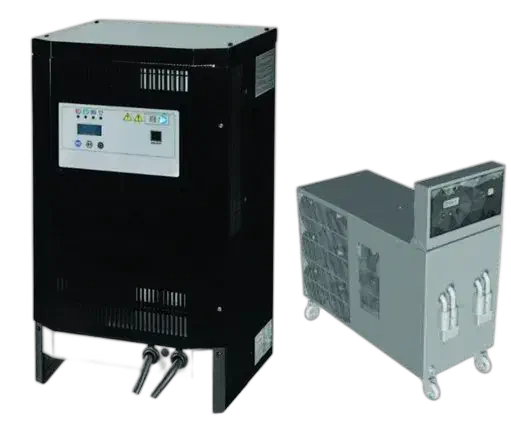
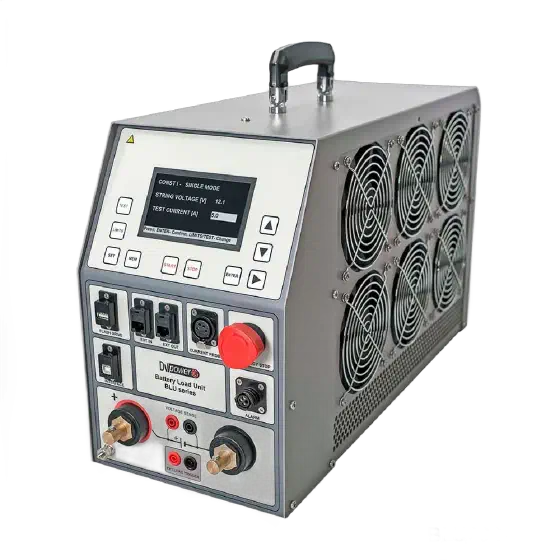
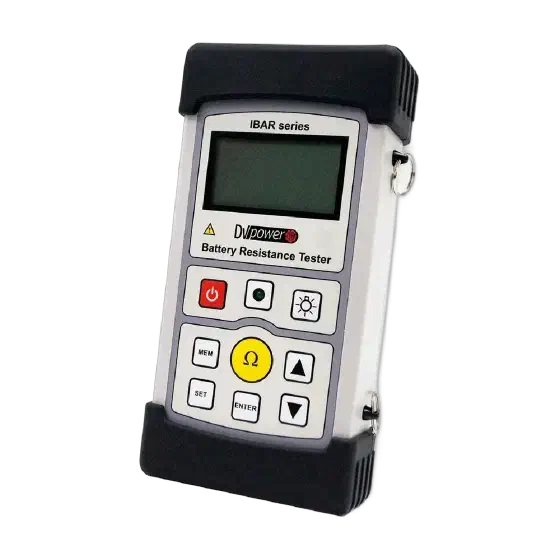
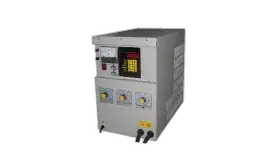
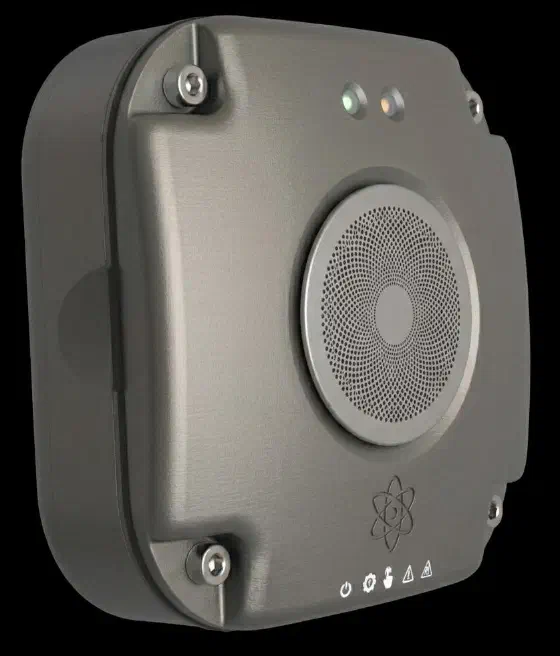
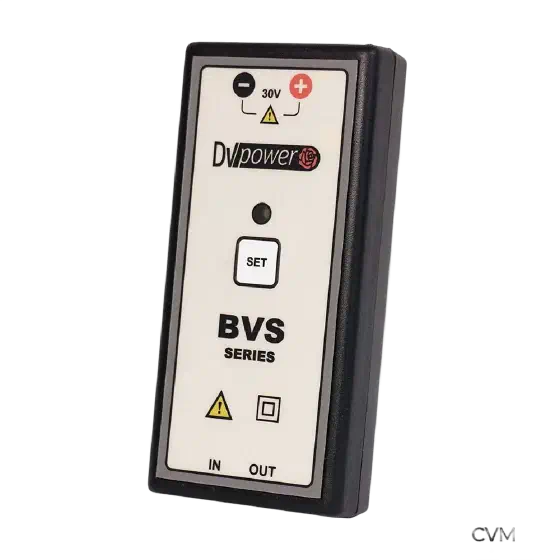
Battery maintenance and charging equipment looks after the stationary banks that supply DC power to substations, power plants, telecoms and data centres: the energy that trips a circuit breaker on a fault when the grid is down. The Amperis range covers the whole battery life cycle: charging it, measuring its condition, proving its real capacity, monitoring the battery room and recovering cells that have lost performance.
What is measured and how?
A good voltage does not mean a good battery. Float voltage says little about real condition; each cell has to be measured. Internal resistance or impedance quickly finds ageing cells without discharging the bank, and the capacity test is the only test that tells with certainty how much energy the battery delivers: it is discharged at constant current, usually for 10 hours, and C = I × t is calculated in Ah.
Example: a bank rated C10 = 1200 Ah by the manufacturer delivers 1134 Ah in the test, 94.5 %. That is fine, because it is still above 80 % (960 Ah), the threshold below which IEEE standards recommend replacement. Measuring each cell voltage during the discharge means only the weak cells are replaced, not the whole string ahead of time.
How to choose the right equipment
- Charging: chargers and rectifiers for permanent float and for recharging after a test.
- Capacity: battery dischargers at constant current, power or resistance, with voltage and capacity limits.
- Quick condition check: battery testers for internal resistance, impedance, conductance and cell voltage.
- Monitoring during the test: the BVS system records cell, inter-cell and string voltage and temperature.
- Battery-room safety: the hydrogen area monitor warns of H2 build-up.
- Recovery and testing: the battery regenerator and the ACBX simulator.
Not sure where to start? Please get in touch.
Applications
- Protection and control of circuit breakers and relays in substations and power plants
- Telecommunications, especially emergency services
- Data-centre UPS and industrial control applications
- Acceptance tests, periodic tests and diagnosis when a fault is suspected
Applicable standards
- IEEE 450 — vented lead-acid (VLA) batteries: maintenance, testing and replacement
- IEEE 1188 — valve-regulated lead-acid (VRLA) batteries
- IEEE 1106 — nickel-cadmium batteries (internal resistance testing is not recommended)
- IEC 60896-11 / 60896-21 — stationary lead-acid batteries
- IEC 62485-2 — safety of battery installations and battery-room ventilation
Frequently asked questions
How often should the capacity test be done?
At acceptance of the bank, periodically according to the maintenance plan and whenever a problem is suspected. Between tests, internal resistance tracks the trend without discharging.
Manual or automatic measurement?
Manual measurement needs someone to take readings from each cell at intervals; automatic measurement, with a monitoring system, records the whole test unattended and catches the first cell to drop in time.
Why monitor hydrogen?
Lead-acid batteries release hydrogen while charging. With poor ventilation an explosive concentration can build up, which is why IEC 62485-2 sets battery-room ventilation requirements.
Resources and contact
See also our technical articles on batteries. Quotations: info@amperis.com · +34 982 20 99 20.
Related calculator
- Sizing, autonomy and capacity test IEEE 485-2020 · IEEE 450-2020 · IEC 60896-21:2004 · IEC 61056-1:2012
- Battery life forecast: state of health (SOH) and remaining life calculator IEEE 450-2020 · IEEE 1188-2005 · IEEE 2962-2025 · IEC 60896
Battery charger and discharger selector Enter your battery's chemistry, voltage and capacity and get the charger, discharger or regeneration set that covers your specification. You can send us the selection with the technical report attached. Open the selector and find my equipment Close the selector
Undecided between several models? Compare them side by side: Battery discharge testers compared · Battery chargers and rectifiers compared · Battery testers compared