Infrared & corona effect cameras
Infrared and corona-effect cameras find faults in electrical assets without contact. Thermal cameras reveal overheating joints, overloads and unbalanced phases, while corona (UV) cameras make surface discharge on high-voltage insulators and conductors visible in daylight. The Amperis range for the electrical sector includes both, for predictive maintenance and live-line inspection.
What they detect and how they work
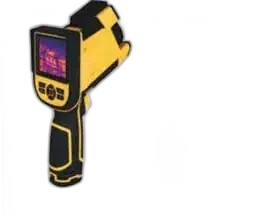
An infrared (thermographic) camera maps surface temperature, so a loose or corroded connection, an overloaded cable or an unbalanced phase shows up as a hot spot; severity is judged from the temperature rise over a healthy reference. A corona (UV) camera detects the ultraviolet photons emitted by partial and corona discharge, overlaying the discharge on a visible image to locate it on insulators, bushings and terminations before it leads to flashover. Both work at a safe distance on energised equipment.
How to choose the right camera
- For thermography: detector resolution, thermal sensitivity (NETD) and temperature range.
- For corona: UV sensitivity, solar-blind (daylight) operation and discharge counting.
- Consider working distance, optics and image fusion.
- Look for radiometric storage, analysis software and report generation.
Need help matching a camera to your inspections? Do not hesitate to contact us.
Applications
- Substation and overhead-line inspection
- Switchgear and connection hot spots
- Insulator, bushing and termination corona
- Motors, drives and rotating plant
- Photovoltaic and renewable installations
Applicable standards
Amperis equipment is referenced to international practice (not national PN/PL designations):
- ISO 18434-1 — condition monitoring and diagnostics: thermography
- Corona/UV detection has no single measurement standard, so results are comparative and support partial-discharge assessment
- IEC 60270 / IEC TS 62478 — partial-discharge measurement context
Frequently asked questions
Infrared or corona — what is the difference?
Thermography finds heat: resistive faults such as loose joints and overloads. Corona/UV finds discharge: insulation problems on high-voltage surfaces. They are complementary, not interchangeable.
When does corona matter?
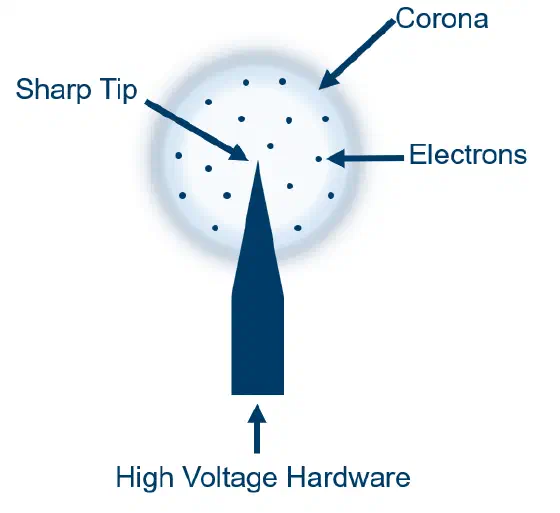
Corona appears where the electric field at a surface exceeds the air’s breakdown threshold — typically on damaged or contaminated HV insulators and sharp points. Detecting it early prevents tracking and flashover.
How is a thermal hot spot rated?
By the temperature rise above a comparable reference point under similar load, following ISO 18434-1 practice and severity bands; the load at the time of inspection must be recorded.
Technical resources
Combine cameras with partial discharge detection for HV diagnostics, or explore other measurements. Request a quote and our engineers will advise on the right camera.
Inspection camera selector Tell us what installation you inspect, at what distance and what you want to find —hot spots, partial discharges or gas leaks— and get the thermal, ultraviolet, acoustic or gas-imaging camera that covers your specification. You can send us the selection with the technical report attached. Open the selector and find my equipment Close the selector
Undecided between several models? Compare them side by side: Handheld thermal cameras compared · Corona cameras compared