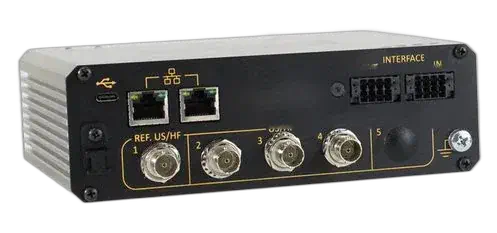
Partial discharge monitor with 8 to 20 channels, for continuous surveillance without system shutdown
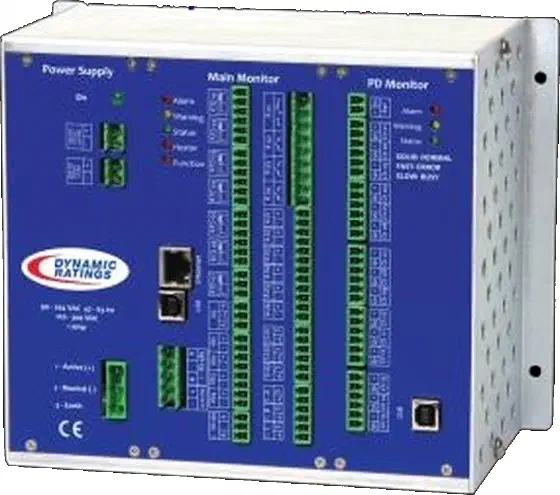
To know the insulation condition of MV and HV transformers, switchgear and cable accessories without taking them out of service, you need a partial discharge monitor that combines acoustic, transient earth voltage (TEV) and high-frequency sensors, filters interference and alerts SCADA. The PD Profiler provides 8 to 20 PD channels per unit with PrPD analysis, measures in acoustic (20 to 250 kHz), high-frequency (3 to 80 MHz) and UHF (100 to 500 MHz) bands, and is attached with magnets or on DIN rail without system shutdown.
PD Profiler key data
- Channels and architecture: up to 20 PD channels per unit, in configurations from 8 to 20 channels; PD Profiler units are daisy-chained and communicate with each other to cover several cabinets with minimal cabling.
- Measuring bands: acoustic from 20 to 250 kHz with 60 dB dynamic range; high frequency from 3 to 80 MHz with 80 dB dynamic range; UHF from 100 to 500 MHz.
- Analysis: phase-resolved PrPD patterns (45-505 Hz) that reveal the nature of each source, discharge qualifying indicators, trend graphs over weeks or months and a geospatial view of the assets, also from a mobile device.
- Interference: configurable filters on every channel and gating-based noise suppression, which selectively masks unwanted signals.
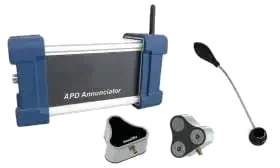
- Sensors: SonoTEV Pro, combining ultrasonic acoustic detection and transient earth voltage (TEV) in a magnetic housing, in direct-contact or airborne versions; HFCT-HD split-core clamp for the cable ground return, aluminium, IP66, spring latch, 20 or 60 mm openings.
- Alarms and communication: configurable alarm contact, local LED and alarm status to SCADA; Modbus IP, MQTT, REST API and USB interfaces.
- Recording and installation: onboard memory for several months of recordings; BNC inputs; magnetic attachment to metallic cabinets or DIN-rail mounting without disconnecting the monitored equipment.
Advantages
8 to 20 channels with PrPD analysis
Every input applies phase-resolved analysis to detect and classify discharge activity, in units available in configurations from 8 to 20 channels.
Advanced interference management
Configurable filters on each channel combine with gating-based noise suppression to keep readings dependable even where interference sources are present.
Scalable daisy-chain architecture
Units link together for clean installations with minimal cabling, so the monitoring scheme can expand easily as more points need coverage.
Installation without shutdown
Strong magnets attach the unit to metallic cabinets, and DIN-rail mounting is also available, without disconnecting the equipment under watch.
Local alarm and onboard memory
An LED lights on the unit when discharge activity is detected while the alarm status reaches the control system, and internal memory stores several months of recordings for long-term trend analysis.
Applications
- Distributed secondary medium-voltage substations, historically left out of monitoring programmes.
- Ageing medium- and high-voltage cable accessories, where partial discharge is most frequent.
- Testing transformers, switchgear and cables in substations, field applications and remote sites.
- Occasional on-site surveys or permanent monitoring integrated into a SCADA system.
About the product
Readings are presented as phase-resolved PrPD patterns that reveal the nature of each discharge source, together with qualifying indicators and trend graphs showing how activity evolves over weeks or months; a geospatial view places every monitored asset on the map, and the recordings stored in the unit can also be reviewed from a mobile device.
The acquisition unit is completed by two sensor families: the SonoTEV Pro, which combines ultrasonic acoustic detection with transient earth voltage measurement in a compact, magnetically mounted housing, available for direct contact or airborne pick-up; and the HFCT-HD split-core clamp, built in aluminium and rated IP66, for monitoring the cable ground return. Available accessories: the SonoTEV Pro sensor, the HFCT-HD clamp with 20 mm or 60 mm openings, and additional units for extending the daisy-chain architecture across several cabinets.
Technical specifications
| PD channels | Up to 20 per unit; configurations from 8 to 20 channels |
| Configuration | Daisy chain, scalable |
| Acoustic bandwidth | 20 kHz to 250 kHz |
| High-frequency bandwidth | 3 MHz to 80 MHz |
| UHF bandwidth | 100 MHz to 500 MHz |
| Dynamic range | Acoustic 60 dB; high frequency 80 dB |
| Communication interfaces | Modbus IP / MQTT / REST API / USB |
| Mounting | Magnetic attachment or DIN rail; no system shutdown |
| Phase-resolved analysis | PrPD, 45-505 Hz; discharge qualifying indicators |
| Filtering and noise suppression | Configurable filters per channel; gating (selective masking of interference) |
| Alarm and recording | Configurable alarm contact, local LED and status to SCADA; onboard memory for several months of recordings |
Frequently asked questions
Which sensors connect to the PD Profiler?
Two families: the SonoTEV Pro, which combines ultrasonic acoustic detection and transient earth voltage measurement in a compact, magnetically mounted housing, in direct-contact or airborne versions; and the HFCT-HD split-core clamp, in aluminium and rated IP66, with 20 or 60 mm openings, which monitors the cable ground return.
How does the PD Profiler signal partial discharge?
It lights an LED on the unit, operates a configurable alarm contact and sends the alarm status to SCADA; data can also be integrated over Modbus IP, MQTT, REST API or USB, and the onboard memory keeps several months of recordings for trend analysis.
How many channels does a unit support?
Up to 20 PD channels per unit, available in configurations from 8 to 20 channels depending on the installation.
Does installation require stopping the system?
No. Magnetic attachment to metallic cabinets or DIN-rail mounting lets the unit be installed without interrupting service.
How is interference handled?
Through configurable filters per channel and gating-based noise suppression, which selectively masks unwanted signals.
Can the installation be expanded later?
Yes. The daisy-chain architecture allows additional units to be linked in to cover more cabinets without redoing the existing cabling.
How are the stored recordings reviewed?
Through the PrPD patterns, trend graphs and geospatial view, also from a mobile device, in addition to integration with Modbus IP, MQTT, REST API or USB.