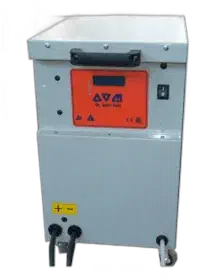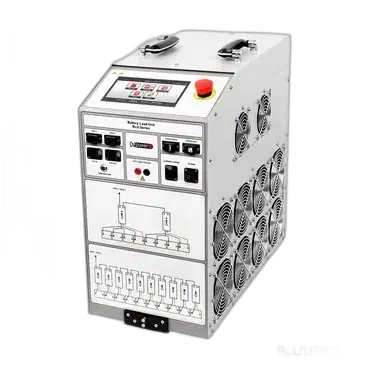
Universal capacity tester and discharger for battery strings up to 1350 V DC
Capacity testing high-voltage battery strings, such as UPS or electric vehicle batteries, and discharging them completely before recycling calls for a discharger that works above 1000 V DC, holds the current or power constant and can go down to 0 V. The BLU-D series does it with two models, BLU1100D and BLU1350D, for strings up to 1100 and 1350 V DC: discharge at constant current, power, resistance or voltage, or along load profiles, up to 100 A and 40 kW, per IEEE 450, IEEE 1188, IEEE 1106 and IEC 60896, with ±0.5 % of reading ±0.1 V voltage measurement and full discharge down to 0 V with the ZVD1350 module.
BLU-D series key data
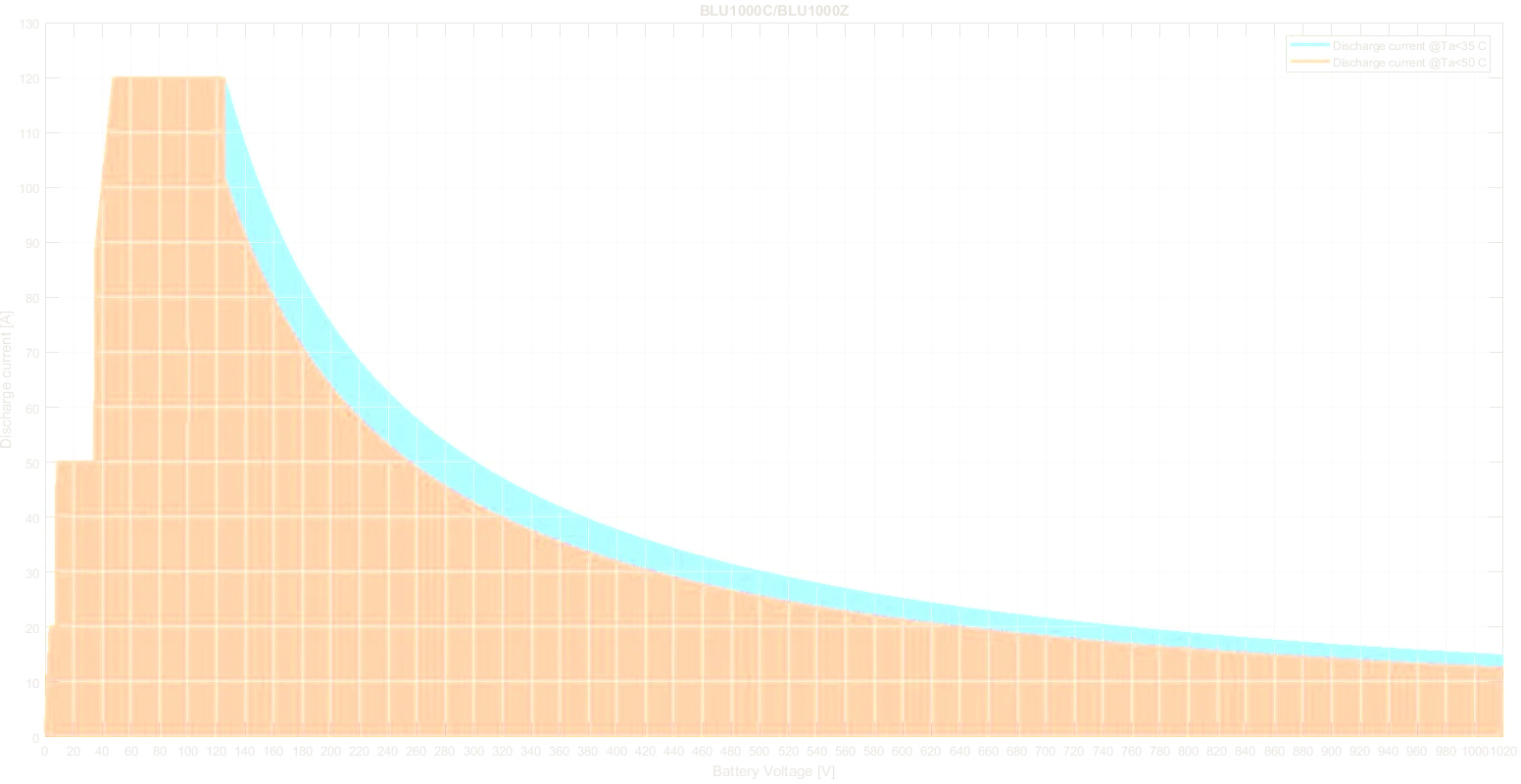
- Models and range: BLU1100D from 0 to 1100 V DC and BLU1350D from 0 to 1350 V DC; up to 100 A with 0.1 A resolution and 40 kW over a wide voltage range; internal measurement up to 200 A and 1350 V DC.
- Discharge modes: constant current, power, resistance or voltage, plus I, P and R profiles that mimic real service, according to IEEE 450, IEEE 1188, IEEE 1106 and IEC 60896.
- Measurement and display: voltage with ±0.5 % of reading ±0.1 V accuracy; voltage, current, power, capacity and elapsed time in real time on the 7-inch touch screen, with voltage/time and capacity/time graphs.
- Discharge down to 0 V: below 5 V it discharges through minimum resistance, and with the external ZVD1350 module it keeps a constant current down to 0 V before recycling; it also discharges lithium systems to a preselected voltage before transport.
- Battery in service: with the 30/300 A DC clamp (1000 A on request) it keeps the total current or power constant without disconnecting the battery from its load.
- Large banks: up to 10 same-model units in parallel, sharing the current equally; cell voltage supervision with the BVS system and ambient and cell temperature control.
- Protected test and data: resume after a mains interruption and remote stop via dry or wet contact; USB, RS232 or Ethernet; reports in XLS, PDF, Word or RTF with the PC software.
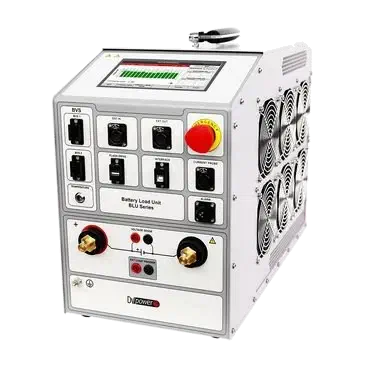
- Unit: 30.0 kg and 601 × 287 × 566 mm, wheeled transport case; 90 to 264 V AC, 50/60 Hz supply.
Advantages
Capacity testing according to the standards
The discharge follows IEEE 450, IEEE 1188, IEEE 1106 and IEC 60896, at constant current, power, resistance or voltage, or along load profiles that mimic real service.
Everything in sight on the touch screen
The 7-inch display shows voltage, current, power, capacity and elapsed time in real time, with voltage/time and capacity/time graphs.
Full discharge before recycling
With the external zero-voltage discharge module the battery reaches 0 V at constant current: the essential step before recycling lithium cells safely.
In-service batteries and large banks
An external DC clamp allows testing without disconnecting the battery from its load, and up to 10 same-model units work in parallel sharing the current equally.
Applications
- Capacity tests of substation, industrial, UPS and electric vehicle banks.
- Full discharge to 0 V of end-of-life batteries before recycling.
- Discharge of lithium systems to a preselected voltage before transport.
- Cell voltage supervision during the test, combined with the BVS system.
- Discharge with ambient and cell temperature control.
About the product
Each unit takes discharge currents up to 100 A adjustable with 0.1 A resolution, internally measures up to 200 A and 1350 V DC, and communicates over USB, RS232 or Ethernet. The PC software presents the parameters numerically and graphically and generates reports in XLS, PDF, Word or RTF.
Accessories: current cables with insulated clamps, 30/300 A current clamp (1000 A on request), ZVD1350 zero-voltage discharge module, cell voltage modules and a wheeled transport case.
Technical specifications
| Models | BLU1100D (0 – 1100 V DC); BLU1350D (0 – 1350 V DC) |
| Discharge current | Up to 100 A; 0.1 A resolution |
| Maximum power | 40 kW over a wide voltage range |
| Discharge modes | Constant I, P, R and U; I, P and R profiles |
| Voltage measurement | ±0.5% of reading ±0.1 V |
| Parallel operation | Up to 10 same-model units |
| Mains supply | 90 – 264 V AC, 50/60 Hz |
| Dimensions and weight | 601 × 287 × 566 mm; 30.0 kg |
Frequently asked questions
What equipment can capacity test a battery bank above 1000 V DC?
The BLU-D series: the BLU1350D tests strings up to 1350 V DC, and the BLU1100D up to 1100 V DC, with up to 100 A and 40 kW, at constant current, power, resistance or voltage per IEEE 450, IEEE 1188, IEEE 1106 and IEC 60896, and measures voltage with ±0.5 % of reading ±0.1 V. If more current is needed, up to 10 same-model units are connected in parallel.
How do you discharge a lithium battery system before transport or recycling?
In a controlled way, to a preselected voltage for transport or down to 0 V for recycling. The BLU-D series discharges strings up to 1350 V DC at constant current; below 5 V it switches to minimum resistance and, with the external ZVD1350 module, keeps the current constant down to 0 V.
What is the difference between the BLU1100D and the BLU1350D?
Only the voltage range: 1100 V DC on the former and 1350 V DC on the latter. Features, accessories and discharge modes are identical.
Can it discharge a battery down to 0 V?
Yes. Below 5 V the unit discharges through minimum resistance and, with the external zero-voltage module, keeps a constant current down to 0 V.
Can a battery be tested without taking it out of service?
Yes. By measuring the total or load current with a DC clamp, the unit keeps the total current or power constant during the test.
What happens if the mains fails during a test?
The resume function picks the test up when power returns, and a remote stop via dry or wet contact allows aborting it from an external system.
How are the results documented?
The PC software downloads the results over USB and creates reports in several formats, with graphs and configurable alarms.