Insulation resistance meters 1 to 15 kV
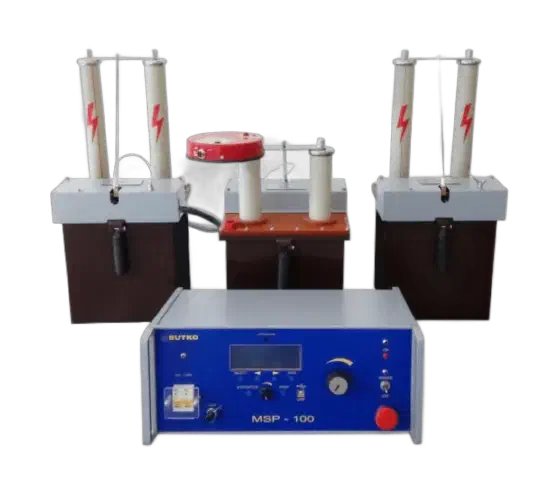
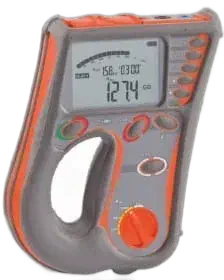
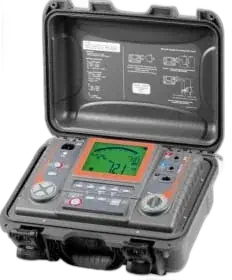
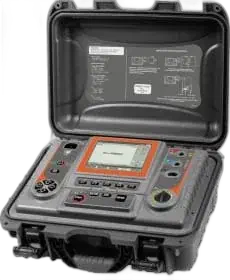

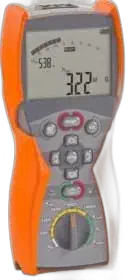
Insulation resistance meters (megohmmeters) apply a DC test voltage and measure the leakage current through the insulation of cables, transformers, motors and switchgear. The reading — in MΩ, GΩ or TΩ — exposes moisture, contamination and ageing before they turn into an earth fault.
What do they measure and how?
The tester holds the selected voltage (50 V to 15 kV across the range) and tracks resistance over time. Beyond the spot value it computes diagnostic ratios: dielectric absorption ratio (DAR, 60 s/30 s) and polarisation index (PI, 10 min/1 min), which IEEE 43 uses to judge rotating machines (PI ≥ 2 acceptable for class B insulation and above).
Choosing the test voltage
- 1 kV: LV installations, telecom and building wiring.
- 2.5 kV: industrial motors and medium-power cables.
- 5 kV: MV cables, transformers and generators.
- 10 kV: HV substation asset diagnostics.
- 15 kV: highest-voltage assets (ANSI/NETA recommends 15 kV above 34.5 kV rating), with high noise immunity.
- Dielectric tests for PPE: insulating gloves, sticks and matting.
Torn between two ranges? Email the asset details to info@amperis.com.
Applications
- Preventive maintenance of substations and lines.
- Motor and generator diagnostics (PI/DAR per IEEE 43).
- Acceptance testing of new cables and installations before energising.
Applicable standards
- IEC 61557-2: insulation resistance measuring equipment for LV systems.
- IEEE 43: insulation of rotating machinery (PI and DAR).
- ANSI/NETA ATS: test voltages and minimum values per voltage class.
Frequently asked questions
What insulation value is acceptable?
The classic rule of thumb is at least 1 MΩ per kV of rated voltage plus 1 MΩ; NETA ATS publishes tables by voltage class. The trend over successive tests matters more than any single reading.
Why measure PI rather than resistance alone?
PI compares 10-minute and 1-minute resistance, compensating for temperature and machine size: a low PI reveals moisture or contamination even when the absolute value looks high.
Can I test a live circuit?
No. The asset must be de-energised, isolated and discharged; after the test, discharge the insulation capacitance to earth before reconnecting.
Resources and contact
Related categories: transformer testing and tellurometers. Quotations: info@amperis.com · +34 982 20 99 20.