SF6 leak detectors for switchgear & GIS
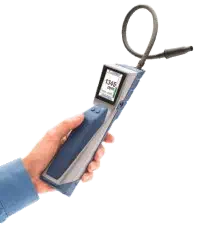
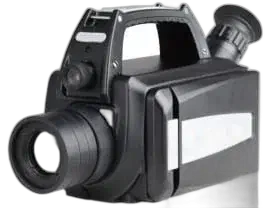
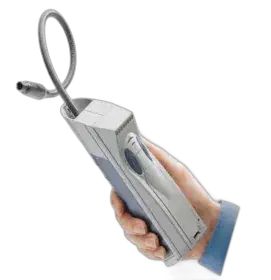
SF6 leak detectors locate and quantify leaks in gas-insulated switchgear, breakers and other SF6 equipment, protecting both dielectric reliability and the environment. The Amperis range for the electrical sector includes sniffer-type detectors and optical gas imaging options for leak surveys and F-gas compliance checks.
What it measures and how it works
Two complementary technologies are used. Sniffer detectors draw air across a sensor near joints and seals, flagging concentrations down to very low levels and helping pinpoint and quantify a leak (often expressed in g/year). Optical gas imaging (OGI) cameras visualise the escaping plume from a distance, ideal for scanning a whole bay quickly. Used together they survey wide areas and then localise the exact source.
How to choose the right detector
- Decide between sniffing (pinpoint and quantify) and imaging (fast wide-area survey) — or both.
- Check sensitivity, expressed as a detectable leak rate (g/year).
- Consider behaviour in draughts and outdoor conditions.
- Look for quantification and logging to document F-gas leak checks.
- Confirm the detector suits the gases in your fleet (SF6 and mixtures).
Planning a leak survey? Do not hesitate to contact us.
Applications
- Routine leak surveys of GIS and breakers
- Tightness checks at commissioning
- Investigating the cause of a density/pressure alarm
- Documented F-gas leak-check compliance
Applicable standards
Amperis detectors support the IEC/EN and EU framework (not national PN/PL designations):
- IEC 62271-1 — permissible leakage rate for switchgear (design target ≤0.5%/year)
- IEC 62271-4 — SF6 handling procedures
- Regulation (EU) 2024/573 — F-gas leak-check duties and prompt repair
- IEC/EN 61010-1 — instrument safety
Frequently asked questions
How often must SF6 equipment be leak-checked?
Under Regulation (EU) 2024/573, switchgear holding 6 kg of SF6 or more must be checked, unless it is tested below 0.1%/year leakage or fitted with pressure/density monitoring and an automatic alert. Any detected leak must be repaired without delay.
Sniffer or camera — which should I use?
Use an optical gas imaging camera to scan a substation quickly and find the area, then a sniffer to pinpoint and quantify the exact leak. Many maintenance teams keep both.
Why does a small leak matter so much?
SF6 has a global warming potential around 23,500 times that of CO2, so even small emissions are significant. A leak also lowers gas density, eventually weakening the insulation.
Technical resources
Combine leak detection with SF6 gas analysers, handling and recovery equipment and infrared and corona cameras. Request a quote.
Related calculator
- SF6: mass, moisture, leaks, recovery and gas quality IEC 60376:2018 · IEC 60480:2019 · IEC 62271-4:2022