An industrial battery that loses capacity through sulphation can be recovered by dissolving the hardened sulphate and then measuring the improvement with a controlled discharge. The Amperis Battery Regenerator combines the universal, programmable MMF charger, which applies a high-frequency ripple current to dissolve the sulphate and restore it as active material, with an automatic discharger that measures the discharge time before and after regeneration; the charger reaches 600 V DC, with a fully configurable charging curve and efficiency and power factor above 90 %.
The Amperis battery regenerator successfully removes sulphation, removing lead sulphate, restoring battery capacity and extending the life of old, sulphated batteries. The regenerator can also be used for annual maintenance. The great advantage of the Amperis Battery Regenerator System is the ability to dissolve the hardened sulfate in the battery terminals and restore it as active material. To remove the hardened sulphate the equipment applies a high frequency ripple current.
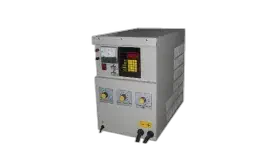
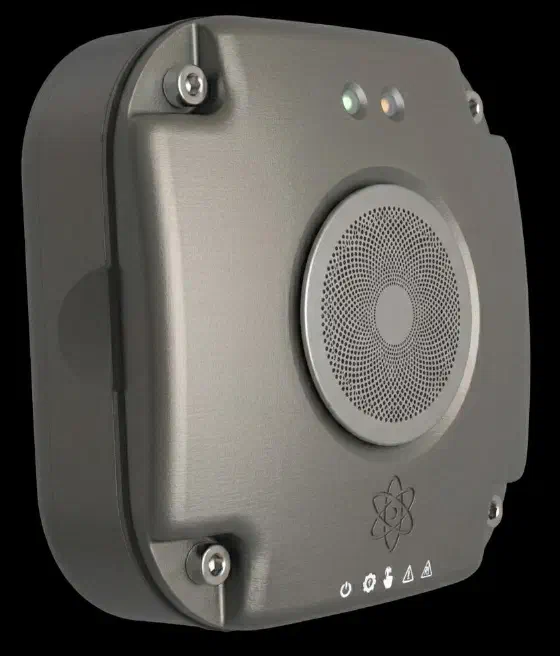
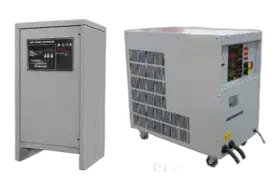
The Amperis Battery Regeneration System consists of a state-of-the-art battery charger and a battery discharger:
The MMF charger is a universal, controlled and programmable charger; it works with any type of battery efficiently thanks to the high frequency IGBT hybrid technology. It can reach up to 600 VDC output and ranges from 50A to 300A. With this charger it is possible to customize the charging curve.
Automatic battery discharger designed to test the efficiency of industrial batteries of any type, voltage and capacity. For batteries up to 600V, possibility to put several units in parallel, which allows the discharge at any current, with high frequency IGBT regulator, which allows the discharge at constant current.
Battery regeneration can be either reconditioning (allows old batteries to be conditioned giving them more years of life) or maintenance (allows the battery to be kept in an optimum sulphate-free state by performing a short annual regeneration).
Reconditioning battery regeneration: the best option for old batteries that are working below their optimum level due to sulphation or to revive batteries that have lost charge capacity because they have been out of use for a long time. We can see from the graph below that after the 4th year of battery life, the capacity and performance of the battery collapses. By regenerating the battery, we recover it and get it to operate at good levels.
Regeneration of the reconditioning battery
Maintenance battery regeneration: the best option to extend the life of new batteries, making it possible to double their life and keep them at their maximum productive capacity. Performing this maintenance, the battery improves its long-term performance by doubling its output.
The regeneration of the maintenance battery
The level of regeneration acquired by the battery must be measurable to quantify the improvement in the battery. To achieve this the most accurate methodology is that used by the Amperis Battery Regeneration System, which uses a battery discharger that allows 100% measurement of the battery discharge time before and after regeneration
Applications:
- Starter batteries
- Stationary batteries
- Batteries for solar, wind, emergency, UPS systems.
- Traction batteries
- Ni-Cd batteries
The problem of sulphation:
The life of more than 80% of the batteries is reduced by sulphation. Lead sulphate inevitably builds up on the electrodes, increasing internal resistance. The causes of sulphation are inherent in lead-acid batteries, but there are other reasons such as battery inactivity, deep discharge or failure to comply with charging cycles, among others.
The accumulation of sulphate crystals on the battery electrodes prevents the battery from effectively supplying current. This process accelerates over time hence the importance of regenerating the battery.
Advantages:
- 70% of the batteries that are discarded are due to sulphation problems. There are several reasons why battery life is shorter than estimated:
- Generation, accumulation and deterioration of lead sulphate
- Reduction of electrolytes caused by electrolysis
- Corrosion
- Loss of active materials
The regeneration of batteries is a very profitable practice because it saves on the purchase of new batteries, reduces the energy bill and eliminates the costs of technical incidents and maintenance. Furthermore, it must be taken into account that the regeneration of batteries contributes to the improvement of the environment, since if the battery is not regenerated it must be discarded, being the waste highly toxic:
- Savings in maintenance costs
- Savings on battery replacement (longer life)
- Savings in equipment repair (less technical incidents)
- Savings on replacement of components
- Labour savings and maximum productivity
- Savings in waste generation and treatment (waste reduction)
Energy cost savings
Amperis Battery Regenerator key data
- System: MMF universal, controlled and programmable charger with high-frequency IGBT technology, plus an automatic battery discharger; reconditioning regeneration or annual maintenance regeneration with the same equipment.
- MMF charger output: from a single cell up to 600 V DC; standard models 0-48 V up to 300 A, 0-80 V up to 150 A, 0-96 V up to 200 A, 0-200 V at 80 A and 0-400 V at 50 A; charging curve fully configurable by the user.
- MMF charger input: single-phase 220-230-240 V AC ±10 % or three-phase 220-240, 400, 440, 480 or 600 V AC ±10 %, 50/60 Hz ±5 Hz; efficiency and power factor above 90 % (average values over the full charging cycle).
- MMF protection: stand-by with error message on wrong battery or reverse polarity, electronic short-circuit and overload protection, anti-arcing with auxiliary wires, self-test at each power-up (<10 s), shutdown in under 3 s if the battery is disconnected, and cycle resumption after a mains blackout.
- Discharger: standard models 12-48 V at 100 or 200 A, 12-96 V at 200 A, 24-135 V at 150 A and 48-220 V at 75 A; display of voltage, current, discharged capacity (Ah), stop voltage and times; 48 h maximum discharge time and RS-232 interface (USB on request).
- Logging and environment: 200-cycle memory in the MMF (600 with optional miniUSB) and Bluetooth extension; IP21 enclosure as standard and IP54 optional, noise below 65 dBA at 1 m and operation from −10 to +50 °C.
- Standards: CE; IEC EN 61000-6-2 and IEC EN 61000-6-4 (EMC); IEC EN 50178 and IEC EN 62040-1 (safety); UL 1564, CSA 22.2 107.2-01 and cCSAus.
- Applications: starter, stationary, traction and Ni-Cd batteries, and batteries for solar, wind, emergency and UPS systems; formation, conditioning, recovery and desulphation.
Frequently asked questions
How do I prove that regeneration has recovered the battery?
With a controlled discharge. The Amperis Battery Regenerator includes an automatic discharger that measures the battery's discharge time before and after regeneration and shows the discharged capacity in Ah, with discharges of up to 48 h and data transfer to a PC over RS-232.
When should I choose maintenance regeneration instead of reconditioning?
Reconditioning is for old batteries working below their optimum level because of sulphation, or that have lost capacity after a long time out of use; maintenance is a short annual regeneration that keeps new batteries free of sulphate to extend their service life. Both are done with the same Amperis Battery Regenerator: MMF charger and discharger.