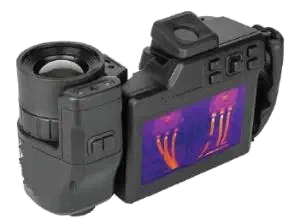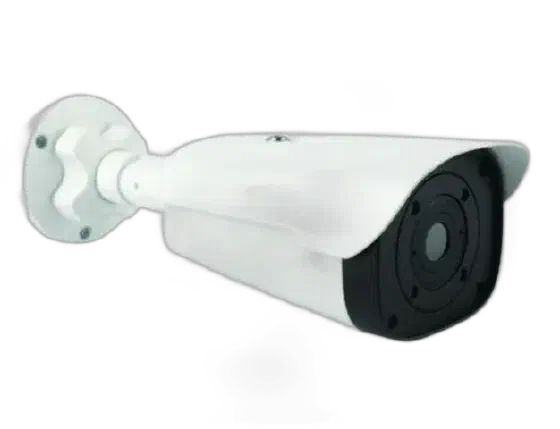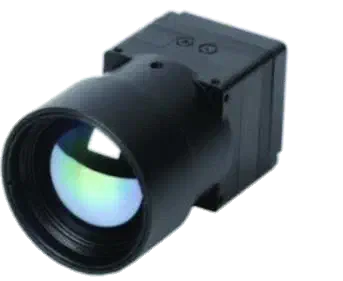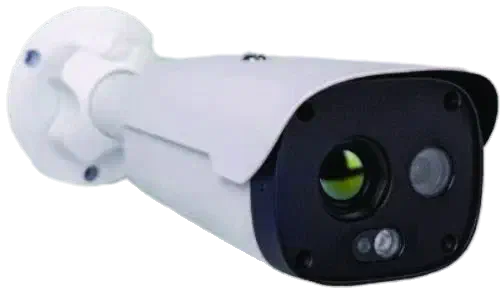
The IR-DLD-TS pairs a thermal detector of up to 640 × 512 with a 1920 × 1080 visible camera and fuses both on screen, with near-infrared night vision up to 30 m.
Advantages
Two spectra, one diagnosis
Picture-in-picture and dual-light fusion overlay the thermal and visible channels, which markedly improves temperature-measurement performance and target identification.
It also watches at night
The near-infrared fill light reaches 30 m, keeping the visible channel useful in total darkness.
Alarms on site and upstream
One hardware alarm input and one output plus alarm-light and buzzer connections; temperature streams to PLC and SCADA systems over Modbus RTU/TCP.
Standard integration
ONVIF Profile-S/G compatibility for video platforms and POE power supply over a single Ethernet cable.
Made for outdoors
IP66 enclosure with lightning and surge protection.
Applications
- Continuous thermal monitoring of substation equipment and switchgear.
- Perimeter and process surveillance requiring visual identification.
- Fire prevention in warehouses and outdoor installations.
About the product
The IR-DLD-TS offers thermal detectors of 640 × 512, 384 × 288 or 256 × 192 alongside its Full HD visible camera. Measurement covers 10 real-time moving points, 10 areas and 3 lines with maximum, minimum and average values, including irregular measurement shapes.
Technical specifications
| Thermal detector | 640 × 512, 384 × 288 or 256 × 192 |
| Visible camera | 1920 × 1080 |
| Night vision | Near-IR fill light, 30 m |
| Image modes | Picture-in-picture, dual-light fusion |
| Temperature output | Modbus RTU/TCP |
| Alarms | 1 input, 1 output; light and buzzer |
| Video and power | ONVIF Profile-S/G; POE |
| Protection | IP66; lightning and surge protection |
Frequently asked questions
What does the dual spectrum add?
The visible channel identifies the exact equipment while the thermal channel quantifies the anomaly; fusion and picture-in-picture show both at once.
Does it see in the dark?
Yes. The near-infrared fill light keeps the visible channel useful up to 30 m in total darkness.
How do alarms work?
Besides the hardware input and output, alarm-light and buzzer connections warn on site, and readings reach the control system over Modbus RTU/TCP.
What does the installation require?
A single Ethernet cable with POE; the IP66 enclosure with lightning and surge protection suits permanent outdoor mounting.