Fixed thermal camera for continuous temperature monitoring
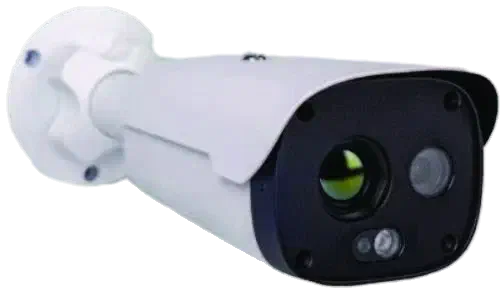
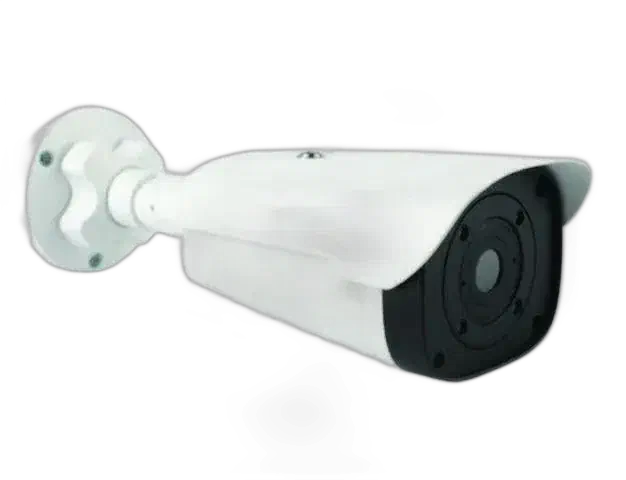
Continuous temperature monitoring of substation equipment, switchgear or unattended processes calls for a fixed thermal camera that measures without an operator and hands the readings straight to the control system, not a handheld camera. The IR DLD-T does it with an uncooled 640 × 480 or 384 × 288 microdetector that tracks up to 10 points, 10 areas and 3 lines in real time with maximum, minimum and average temperatures, and sends the values to PLC or SCADA systems over Modbus RTU/TCP, with one hardware alarm input and one output, ONVIF Profile-S/G video and a single POE Ethernet cable.
IR DLD-T key data
- Detector: uncooled focal-plane thermal microdetector, 640 × 480 or 384 × 288 pixels depending on the version.
- Measurement: in standard mode, 6 real-time moving points, 6 areas and 3 lines with maximum, minimum and average temperatures; in extended mode, 10 points, 10 areas and irregular-shape drawing.
- Temperature output: Modbus RTU/TCP, so PLC and SCADA systems read the IR DLD-T temperatures directly.
- Alarms: 1 hardware alarm input channel and 1 alarm output for local signalling.
- Video: ONVIF Profile-S/G compatible; the IR DLD-T joins video management platforms like any other IP camera.
- Lens: athermalised fixed focal length that keeps its calibration in high and low ambient temperatures.
- Installation: POE supply, with power and data over a single Ethernet cable, and IP66 outdoor enclosure with lightning and surge protection.
Advantages
Unattended monitoring
Fixed-mount installation with continuous measurement of maximum, minimum and average temperatures, including irregular measurement shapes.
An optic that ignores the weather
The athermalised fixed-focal lens holds its calibration in high and low ambient temperatures; the IP66 enclosure adds lightning and surge protection outdoors.
Direct integration
Temperature output over Modbus RTU/TCP, one hardware alarm input and one output, and ONVIF Profile-S/G compatibility for video management platforms.
One-cable deployment
POE supplies power and data over a single Ethernet cable, simplifying outdoor wiring.
Applications
- Continuous thermal monitoring of substation equipment and switchgear.
- Fire prevention on conveyors, warehouses and waste bunkers.
- Process temperature control in unattended installations.
About the product
The IR DLD-T is a network thermal camera for permanent installation: it behaves like an IP camera for video platforms while serving radiometric data to industrial control systems, with alarms triggered locally through the hardware output.
Technical specifications
| Detector | Uncooled, 640 × 480 or 384 × 288 |
| Lens | Athermalised fixed focal length |
| Measurement modes | Up to 10 points, 10 areas, 3 lines; irregular shapes |
| Temperature output | Modbus RTU/TCP |
| Alarms | 1 hardware input, 1 output |
| Video | ONVIF Profile-S/G |
| Power | POE |
| Protection | IP66; lightning and surge protection |
| Standard measurement mode | 6 moving points, 6 areas and 3 lines (max/min/average) |
Frequently asked questions
Which thermal camera is best for monitoring a substation around the clock?
A fixed radiometric camera that measures without an operator and sends temperatures to the control system. The IR DLD-T tracks up to 10 points, 10 areas and 3 lines with a 640 × 480 or 384 × 288 detector, delivers the values over Modbus RTU/TCP and mounts outdoors in an IP66 enclosure with a single POE cable.
How many measurement points can the IR DLD-T monitor at once?
In standard mode, 6 moving points, 6 areas and 3 lines in real time, with maximum, minimum and average temperatures; in extended mode, up to 10 points and 10 areas, with irregular measurement shapes.
How does it deliver readings to a control system?
Over Modbus RTU/TCP, so PLC and SCADA systems read temperatures directly; the hardware alarm output also switches local signalling.
Does it work with existing video systems?
Yes. ONVIF Profile-S/G compatibility integrates the stream into standard video management platforms.
What does the installation require?
A single Ethernet cable: POE carries both power and data. The IP66 enclosure suits permanent outdoor mounting.
Is the optic affected by ambient temperature?
No. The athermalised fixed-focal lens keeps its calibration in high and low temperature environments.