Continuous monitoring of dissolved hydrogen, the first gas to reveal an arc, a partial discharge or a hot spot, calls for a hydrogen-specific sensor that mounts on a tank valve and needs no calibration gases and no periodic calibration. GRIDSCAN5000 measures 25 to 5,000 ppm H2 in oil, or its in-oil equivalent from the head space, with ±20 % of reading or ±25 ppm accuracy (±10 % or ±15 ppm on the 5000-HP version), T90 response under 60 minutes and patented self-calibration, and delivers the reading over Modbus RTU or DNP3 on RS-485 from a 12 to 48 VDC supply.
GRIDSCAN5000 key data
- Measuring principle: hydrogen-specific solid-state palladium-alloy element, with cross-sensitivity below 2 % to H2O, CO2, C2H2, C2H4 and CO. GRIDSCAN5000 runs automatic reference cycles that remove drift, with no calibration gases, membranes or pumps.
- Range and accuracy: 25-5,000 ppm H2 dissolved in oil, or 25-5,000 ppm in-oil equivalent on the gas-phase version; accuracy ±20 % of reading or ±25 ppm, whichever is greater (±10 % or ±15 ppm on the 5000-HP); repeatability ±10 % or ±15 ppm.
- Response and compensation: T90 under 60 minutes once hydrogen reaches the sensor; GRIDSCAN5000 measures oil temperature with a built-in RTD to compensate the dissolved gas reading.
- Oil limits: −40 to 105 °C within calibration (up to 135 °C without damage), −40 to 80 °C in gas phase and 0.1 to 10 bar pressure; supports mineral oil, silicone, natural ester and synthetic ester.
- Communication and power: galvanically isolated two-wire RS-485, Modbus RTU and DNP3 (Modbus address 1, DNP3 source 4 and destination 3, 19,200 baud); 12-48 VDC and 10 W maximum; 4-20 mA output with the GRIDSCAN AO-1 module, scalable from 0-100 to 0-5,000 ppm.
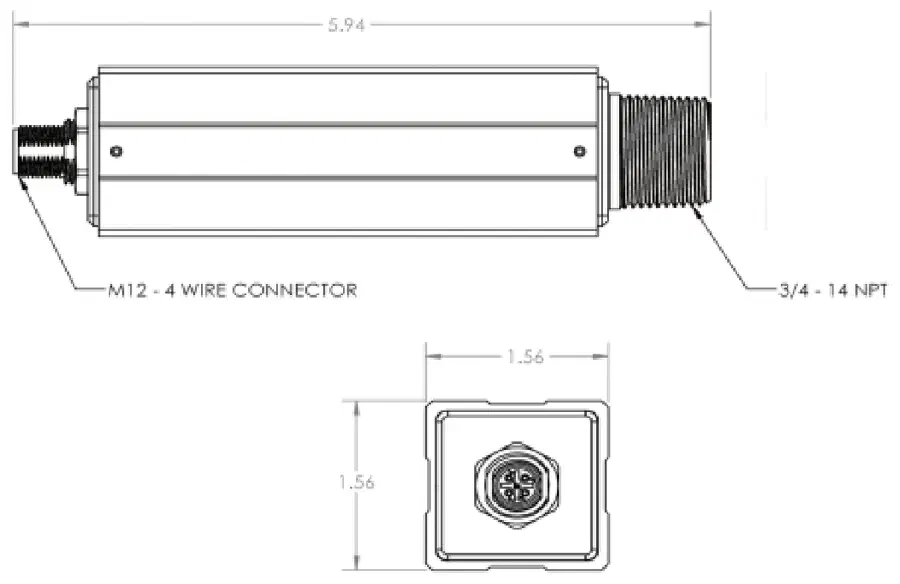
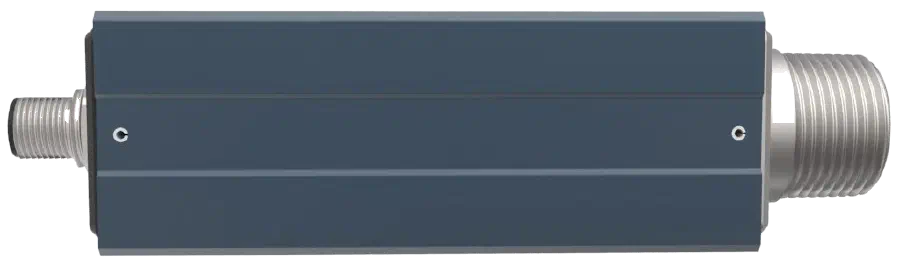
- Mounting: 3/4"-14 NPT thread on a ball or gate valve ≥ DN20, horizontal with air bleed in oil or horizontal or vertical in the head space; 151 × 39.6 × 39.6 mm and 387 g, with a single 4-wire M12 connector.
- Outdoor duty: IP68 (7.62 m of water for 14 days), C5M marine corrosion class, ambient −40 to 70 °C and 30 g shock for 18 ms to IEC 60068-2-27.
- Certifications and logging: FM 6520:2022 in liquid phase, CE marking, IEC 61010-1 and IEC 61326; GRIDSCAN5000 stores 1 year of history and carries a 3-year warranty on the unit and 10 years on the sensing element.
Advantages
It warns before any other signal
Hydrogen is the first gas generated by an incipient arc, a partial discharge or a hot spot. Watching it rise in real time leaves room to schedule the intervention instead of discovering the problem in the six-monthly oil analysis.
No calibration, no consumables
The sensing element is solid state and calibrates itself: no membranes, no calibration gases, no pumps and no chromatography columns, and nothing to replace between transformer inspections.
Affordable fleet-wide
Its price and its simple installation make it viable to equip not only the critical assets but the whole fleet, which is where continuous monitoring really pays.
Built for outdoor service
IP68 ingress protection — 7.62 m of water for 14 days —, C5M corrosion class equivalent to a marine environment and operation from −40 to 70 °C, with vibration testing and a 30 g shock rating to IEC 60068.
Immediate integration
It communicates over Modbus RTU or DNP3 on two-wire RS-485, both stand-alone and inside third-party multi-gas monitors, and supports a 4-20 mA output through the matching module.
Applications
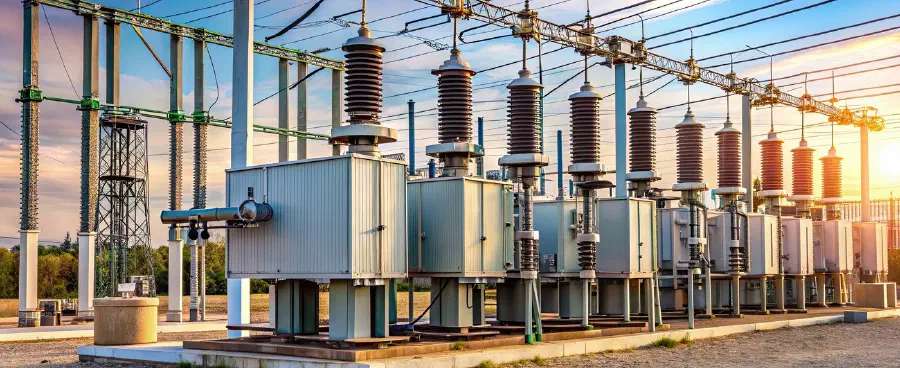
- Power and distribution transformers, new or in service.
- Wind and solar farm transformers, with high harmonic content.
- Network transformers installed in underground vaults.
- Offshore platforms and substations in salt-laden air.
- Railway traction and industrial transformers.
About the product
The oil-calibrated version mounts horizontally with the air-bleed assembly; the gas-calibrated version accepts horizontal or vertical mounting in the head space. Both need a 3/4" ball or gate valve (≥ DN20) and thread sealant, with no galvanised fittings.
A single shielded four-conductor 18 AWG cable, with a female M12 connector and IP67/IP68 rating, carries power and communications to the control cabinet over typical runs of 5 to 30 m; from there, the RS-485 bus reaches up to 1,000 m. The sensor itself keeps one year of history, so a communications outage leaves no gap in the data.
The Windows configuration utility connects over RS-485 or through an Ethernet-to-RS485 bridge and gathers the whole commissioning process into four tabs: real-time data with capture to CSV, protocol and address, clock synchronisation, owner, substation and transformer identification, and selection of the insulating liquid — mineral, silicone, natural ester or synthetic ester with its own Ostwald slope and offset.
The range is completed by the high-performance version, accurate to ±10 % or ±15 ppm, the continuously self-calibrating version, which calibrates without interrupting the measurement, and an extended-range version from 250 to 50,000 ppm for nitrogen blankets with high concentrations.
Technical specifications
| Measuring range | 25 to 5,000 ppm in oil; 25 to 5,000 ppm in-oil equivalent on the gas-phase version |
| Accuracy | ±20 % of reading or ±25 ppm (±10 % or ±15 ppm on the high-performance version) |
| Repeatability | ±10 % of reading or ±15 ppm, whichever is greater |
| Response time | Under 60 minutes |
| Cross-sensitivity | Below 2 % to H2O, CO2, C2H2, C2H4 and CO |
| Data logging | 1 year of history held in the unit |
| Insulating liquids | Mineral oil, silicone, natural ester and synthetic ester |
| Temperatures | Ambient −40 to 70 °C; oil −40 to 105 °C; gas phase −40 to 80 °C |
| Communications | Two-wire RS-485, Modbus RTU and DNP3; 19,200 baud, 8N1 as shipped |
| Power supply | 12 to 48 VDC; 10 W maximum consumption |
| Connection | 3/4"-14 NPT thread; 4-wire M12 electrical connector |
| Dimensions | 151 × 39.6 × 39.6 mm |
| Ingress protection | IP68 to IEC 60529; C5M marine corrosion class |
| Certifications | CE marking, FM 6520:2022 in liquid phase, RoHS 2011/65/EU, IEC 61010-1 and IEC 61326 |
| Warranty | 3 years on the unit and 10 years on the hydrogen sensing element |
| Measuring principle | Hydrogen-specific solid-state palladium-alloy element; self-calibration through automatic reference cycles |
| Oil limits | Pressure 0.1 to 10 bar; up to 135 °C without damage (calibrated up to 105 °C) |
| Weight | 387 g |
Frequently asked questions
Which online hydrogen sensor is best for monitoring a whole transformer fleet?
One that is hydrogen-specific, needs no consumables or periodic calibration and installs on a tank valve. GRIDSCAN5000 screws onto a 3/4" valve, measures 25 to 5,000 ppm with ±20 % of reading or ±25 ppm, is powered at 12-48 VDC through a single four-wire M12 cable and communicates over Modbus RTU or DNP3, so it integrates into the SCADA of the whole fleet.
Is it installed in the oil or in the head space?
There are two factory-calibrated versions. The oil version mounts horizontally with the air-bleed assembly, on a ball or gate valve of at least DN20 and away from turbulent oil flow; the gas-phase version mounts horizontally or vertically in the head space and reports hydrogen as an in-oil equivalent, because the head-space concentration is about 20 times higher than the dissolved one. Both GRIDSCAN5000 versions measure 25 to 5,000 ppm.
Does it need periodic calibration?
No. The sensor self-calibrates and corrects drift, so the reading stays valid without calibration or removal throughout its service life.
Does it work with ester or silicone transformers?
Yes. It supports mineral oil, silicone, natural ester and synthetic ester; the liquid type is selected in the configuration software.
How long before the first reliable reading?
The unit runs its self-test and a start-up sequence once powered which, on a new installation or after a long outage, can last up to 16 hours before it delivers stable, accurate readings; after a short outage it gives approximate readings within about 30 minutes.
How does it integrate with SCADA?
Through Modbus RTU or DNP3 on two-wire RS-485. Factory settings are Modbus address 1, DNP3 source 4 and destination 3, 19,200 baud and 8N1. A 4-20 mA signal is also available through the matching module.
Can it be fitted with the transformer in service?
It mounts on a 3/4" valve, following the bleed procedure that matches the sensor type. Installation must be carried out by qualified personnel authorised to work on the transformer.